


The Government of India has imposed a 90-day restriction on bulk purchases of diesel and petrol from retail fuel stations. Under the new directive, no customer or vehicle can purchase more than 200 litres of diesel per day from retail outlets, while institutional and commercial users have been directed to source fuel through dedicated consumer or captive pumps.
✅ Government restricts bulk diesel and petrol sales at retail outlets.
✅ No customer can purchase more than 200 litres of diesel per day from a fuel station.
✅ Institutional and commercial users must use dedicated consumer or captive pumps.
✅ Resale of diesel purchased from retail outlets has been prohibited.
✅ Order will remain effective for up to 90 days.
✅ Move aims to prevent diversion and misuse of retail-priced fuel.
✅ Fuel prices have risen amid Middle East geopolitical tensions.
New Delhi, June 12: The Government of India has imposed temporary restrictions on the bulk sale of petrol and diesel at retail fuel stations, introducing tighter controls on fuel distribution amid rising global energy market volatility and supply-chain pressures.
According to an official notification, the restrictions will remain in force for an initial period of 90 days, unless modified or withdrawn through a subsequent government order.
The directive specifically limits the quantity of high-speed diesel (HSD) that can be purchased from retail fuel outlets.
Under the new rules, retail fuel dealers are prohibited from selling more than 200 litres of diesel to a single customer or vehicle in a single day.
In addition, the government has banned the resale of diesel procured from retail fuel stations, strengthening oversight of fuel distribution and reducing the possibility of diversion into unauthorized commercial channels.
The policy is designed to ensure that fuel sold through retail outlets primarily serves individual consumers while large-scale users obtain supplies through approved commercial mechanisms.
Institutional and commercial consumers have been instructed to source their fuel requirements through designated consumer pumps, captive facilities or other authorized procurement channels rather than relying on public retail stations.
The move is expected to affect bulk fuel purchasers across sectors such as transportation, logistics, construction and industrial operations that traditionally depend on retail fuel purchases for operational requirements.
Market analysts believe the new restrictions could alter fuel procurement patterns and increase monitoring of retail fuel sales by major oil marketing companies.
State-owned oil marketing companies such as Indian Oil Corporation (IOC), Bharat Petroleum Corporation Limited (BPCL) and Hindustan Petroleum Corporation Limited (HPCL) may face increased scrutiny regarding retail fuel distribution and compliance with the new guidelines.
The decision comes against the backdrop of heightened uncertainty in global energy markets caused by ongoing geopolitical tensions in the Middle East.
Recent disruptions to shipping routes and crude oil supplies passing through the Strait of Hormuz, one of the world’s most important energy corridors, have contributed to higher international crude oil prices.
According to the report, nearly one-fifth of global oil trade passes through the Strait of Hormuz, making the region critical to global energy security.
As international crude prices have risen, domestic fuel prices in India have also experienced upward revisions.
Petrol prices in Delhi have reportedly increased by Rs 4.75 per litre since May 15, while diesel prices have risen by Rs 4.82 per litre during the same period.
The increases reflect sustained pressure from global crude oil markets and supply-side concerns resulting from ongoing geopolitical developments.
Government officials have maintained that India had kept domestic fuel prices stable for an extended period despite global volatility and was among the few major economies not to immediately pass on higher costs to consumers.
The latest restrictions are expected to help authorities maintain better control over fuel distribution, prevent black marketing and ensure adequate availability of petrol and diesel for ordinary consumers during periods of market stress.
India’s decision to restrict bulk diesel and petrol sales at retail outlets represents a significant step toward strengthening fuel distribution oversight amid global energy uncertainty. By limiting large-volume purchases and directing commercial users toward dedicated procurement channels, the government aims to prevent diversion, maintain fuel availability, and safeguard consumer interests during a period of heightened geopolitical and market volatility.
FAQ Section
Q1. What is the new limit on diesel purchases from retail fuel stations?
A customer or vehicle cannot purchase more than 200 litres of diesel per day from a retail outlet.
Q2. How long will the restriction remain in force?
The order will remain effective for up to 90 days unless modified or withdrawn by the government.
Q3. Who will be affected by the new fuel restrictions?
Bulk fuel consumers, including commercial and institutional users, are expected to be most affected.
Q4. Why has the government imposed these restrictions?
The move aims to prevent fuel diversion, curb unauthorized resale and ensure adequate fuel availability for retail consumers.
Q5. Can commercial users continue purchasing fuel?
Yes. Commercial and institutional users are required to procure fuel through dedicated consumer pumps or captive fuel facilities.
Related posts :
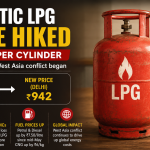 Domestic LPG Price Hiked By Rs 29, Delhi Cylinder Rate Rises To Rs 942
 BPCL Maintains Stable Fuel Supply Across Delhi Amid Growth in Petrol, Diesel and LPG Demand
 Over 55,000 PNG connections gasified in 5 days, 4.3 lakh 5 kg FTL cylinders sold since March 23
India Maintains Stable LPG Supply Amid West Asia Crisis, Delivers 1.43 Crore Cylinders in Three Days
Over 55,000 PNG connections gasified in 5 days, 4.3 lakh 5 kg FTL cylinders sold since March 23
India Maintains Stable LPG Supply Amid West Asia Crisis, Delivers 1.43 Crore Cylinders in Three Days
 Centre Launches ATF Price Stabilisation Scheme, Fixes Aviation Fuel Rate at Rs 86.32 Per Litre for Airlines
 HPCL Strengthens Sustainable Packaging Push, Recycles 12,000 Tonnes of Plastic in FY 2025-26
