

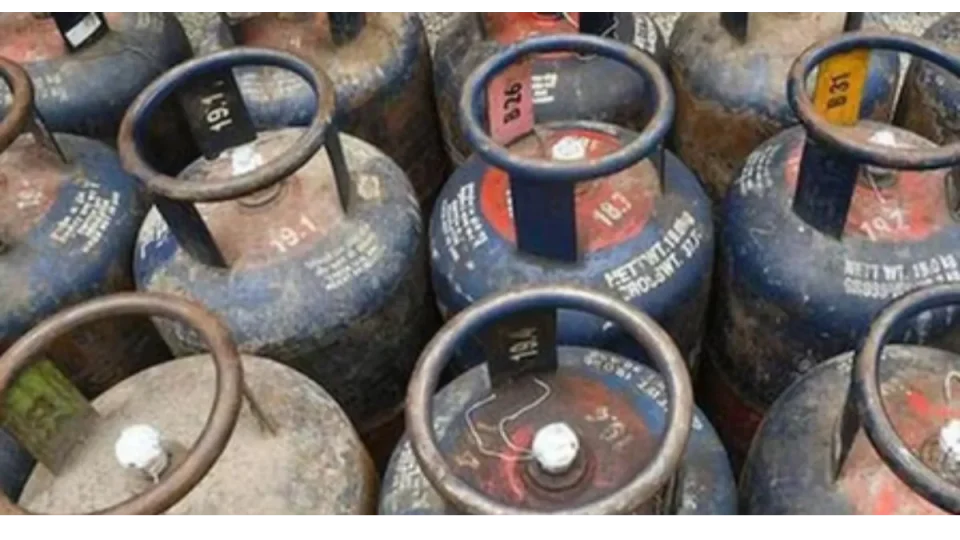
The Government of India has removed all restrictions on the supply of commercial LPG cylinders and partially restored bulk LPG supplies following improved domestic production and better import availability after easing geopolitical tensions in West Asia. The move is expected to provide significant relief to commercial and industrial consumers across the country.
Key Highlights
✅ Government removes all sectoral restrictions on commercial LPG supply.
✅ Bulk LPG supply restored to 50% of pre-crisis consumption levels.
✅ Improved LPG availability follows easing of the West Asia crisis and reopening of the Strait of Hormuz.
✅ Domestic LPG production to remain above 40,000 metric tonnes per day.
New Delhi, June 25: In a significant relief for businesses and industrial consumers, the Ministry of Petroleum and Natural Gas has announced the removal of all sectoral restrictions on the supply of non-domestic packed Liquefied Petroleum Gas (LPG). The decision restores commercial LPG availability to levels prevailing before the disruption caused by the recent West Asia crisis.
The move comes after a notable improvement in both domestic LPG production and the projected availability of imported LPG cargoes. According to the Ministry, the easing of geopolitical tensions following the US-Iran peace agreement and the reopening of the Strait of Hormuz, a critical global energy shipping route, have significantly improved supply conditions.
In addition to lifting restrictions on commercial LPG cylinders, the government has also relaxed restrictions on bulk LPG supplies, which had been suspended at the height of the crisis. Bulk LPG allocations have now been restored to 50 percent of pre-crisis consumption levels, offering substantial relief to commercial establishments, industries and large-scale consumers that rely on LPG for operations.
During the West Asia supply disruption, the government took several emergency measures to safeguard domestic LPG availability. Under provisions of the Essential Commodities Act, authorities directed that C3 and C4 hydrocarbon streams be utilized exclusively for LPG production. This led to the diversion of feedstocks away from petrochemical and other downstream industries to prioritize cooking fuel availability for domestic consumers.
With supply conditions stabilizing, the government has now decided to gradually reduce the diversion of C3/C4 streams into the LPG pool. The Ministry clarified that enhanced allocation of these streams to petrochemical and other critical sectors will be undertaken while ensuring that overall domestic LPG production remains above 40,000 metric tonnes per day.
The Centre for High Technology (CHT) has been tasked with allocating enhanced C3/C4 streams among eligible organizations and sectors. It will also submit regular monitoring reports to the Ministry to ensure balanced supply management.
The government emphasized that ensuring uninterrupted LPG supply to domestic households remained its highest priority throughout the crisis period. To maintain household fuel availability, temporary restrictions were imposed on commercial LPG consumption while oil marketing companies (OMCs) coordinated supply management and logistics.
According to the Ministry, these timely interventions helped India maintain stable LPG availability despite significant disruptions in international energy markets and global supply chains.
To strengthen future planning and operational coordination, the government has instructed all Oil Marketing Companies (OMCs) to maintain comprehensive databases of commercial and industrial LPG consumers. A unified sectoral database will also be created to facilitate efficient monitoring, demand forecasting and supply management.
The Ministry reiterated its commitment to expanding Piped Natural Gas (PNG) connectivity as part of India’s transition towards cleaner and more efficient fuels. Commercial and industrial consumers that have already switched to PNG will continue to use it, while eligible LPG consumers located within PNG network coverage areas will be progressively encouraged to transition to piped gas in coordination with City Gas Distribution (CGD) entities.
To facilitate the implementation of the revised LPG supply framework, the Secretary, Ministry of Petroleum and Natural Gas, has written to the Chief Secretaries of all States and Union Territories seeking support and coordination.
The Ministry stated that the latest decision reflects the government’s balanced approach toward ensuring national energy security, supporting industrial growth and promoting cleaner fuel adoption while maintaining uninterrupted access to LPG for households.
Industry experts believe the easing of LPG restrictions will help reduce supply uncertainties for commercial users, support economic activity and improve fuel availability across sectors such as hospitality, manufacturing, food processing and small businesses.
Conclusion
The government’s decision to restore commercial LPG supplies and partially resume bulk LPG allocations marks a significant step toward normalizing fuel availability after recent global supply disruptions. With improved domestic production, stabilizing international markets and continued expansion of PNG infrastructure, India is strengthening both energy security and supply resilience while supporting economic growth and cleaner energy adoption.
