

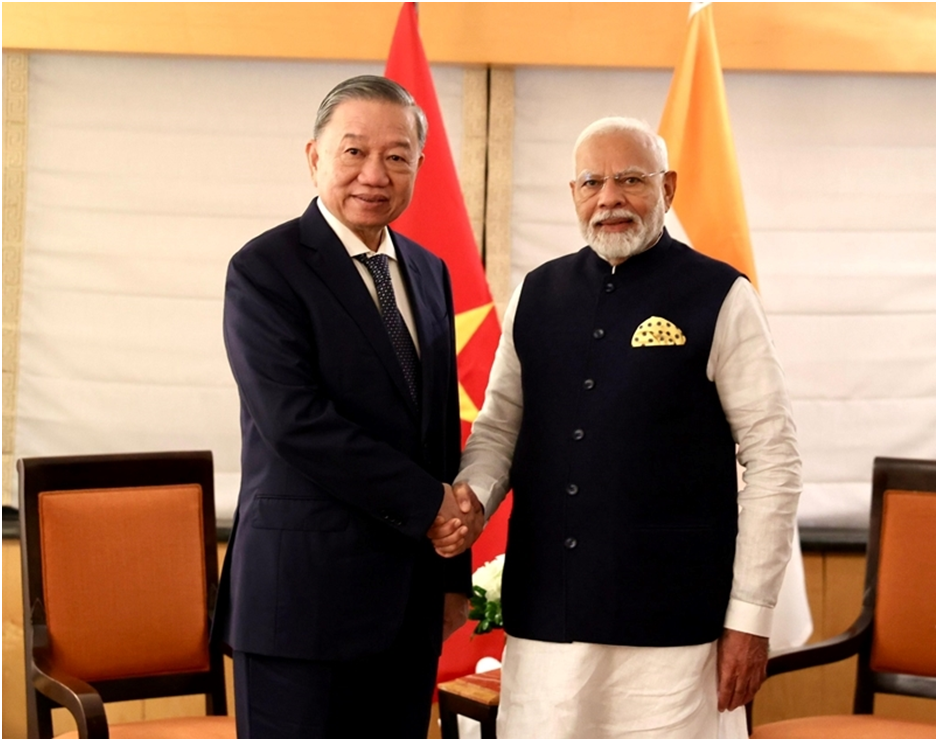
New Delhi: Vietnam’s Party General Secretary and President ToLam will pay a state visit to India from May 5 to May 7, at the invitation of Indian Prime Minister Narendra Modi. The visit is widely regarded as a major diplomatic milestone, expected to further deepen bilateral ties, strengthen the Vietnam–India Comprehensive Strategic Partnership, and open a new chapter of long-term, forward-looking cooperation between the two nations.
The visit comes at a time of rapidly evolving regional and global developments, as Vietnam and India continue to enhance strategic coordination and promote substantive cooperation across multiple sectors. It is also expected to reaffirm the enduring political trust between the two countries, as well as their shared commitment to peace, stability and prosperity in the Indo-Pacific region.
A decade of the Vietnam–India Comprehensive Strategic Partnership (2016–2026)
Vietnam and India share a long-standing friendship rooted in history and strengthened by deep people-to-people ties. This relationship was nurtured by the visionary leadership of President Ho Chi Minh and India’s first Prime Minister Jawaharlal Nehru, who laid the foundation for solidarity, mutual respect and enduring cooperation between the two nations.
Building on this legacy, Vietnam and India have continued to develop a stable, resilient and steadily expanding partnership, driven by shared political aspirations and mutual support during their respective struggles for national independence and their ongoing efforts in national development. The bilateral relationship has also contributed positively to peace and stability in the region and beyond.
Vietnam–India relations have evolved steadily over the decades through a series of important milestones. In 1954, India opened its Consulate General in Hanoi, marking an early step in strengthening bilateral engagement. Two years later, in 1956, Vietnam established its Consulate General in New Delhi, further expanding official contacts between the two sides. On February 7, 1958, in New Delhi, President Ho Chi Minh and Prime Minister Jawaharlal Nehru signed the Vietnam–India Joint Communiqué, laying an important political foundation for the development of bilateral relations. In 1972, the two countries elevated their relationship to the ambassadorial level and officially established full diplomatic relations, opening a new chapter of deeper and more comprehensive cooperation.
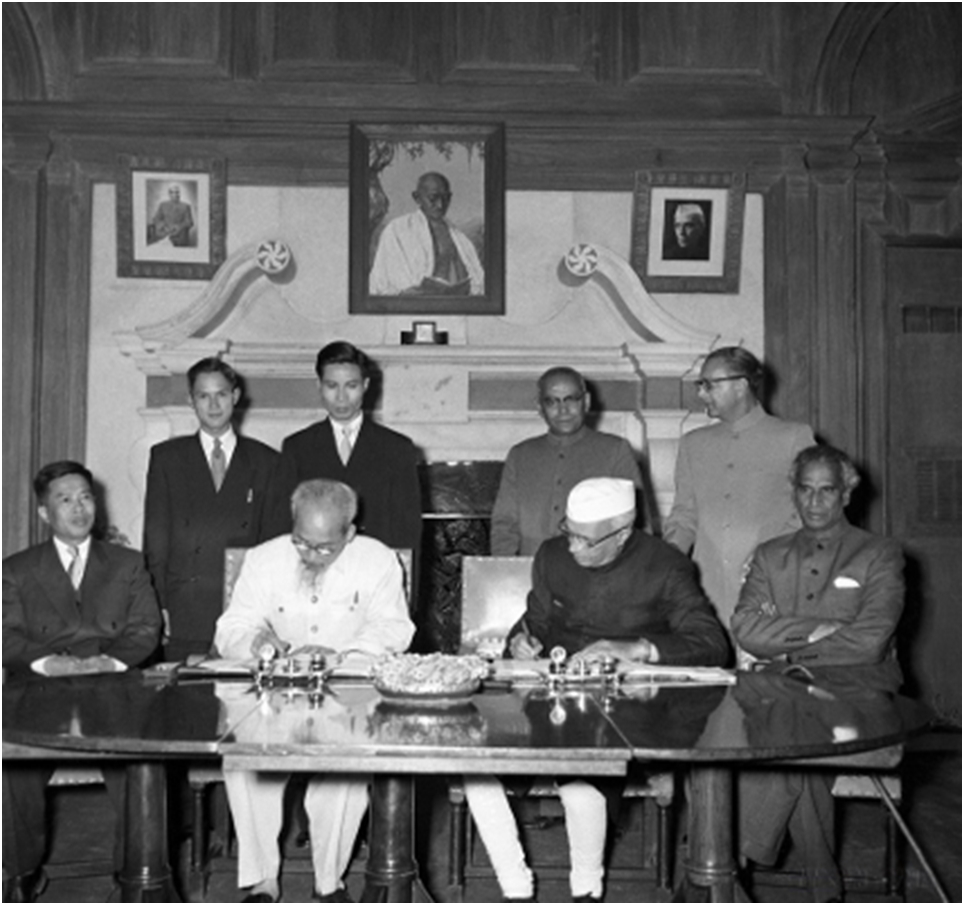
Vietnam–India Joint Communiqué in New Delhi, February 7, 1958.
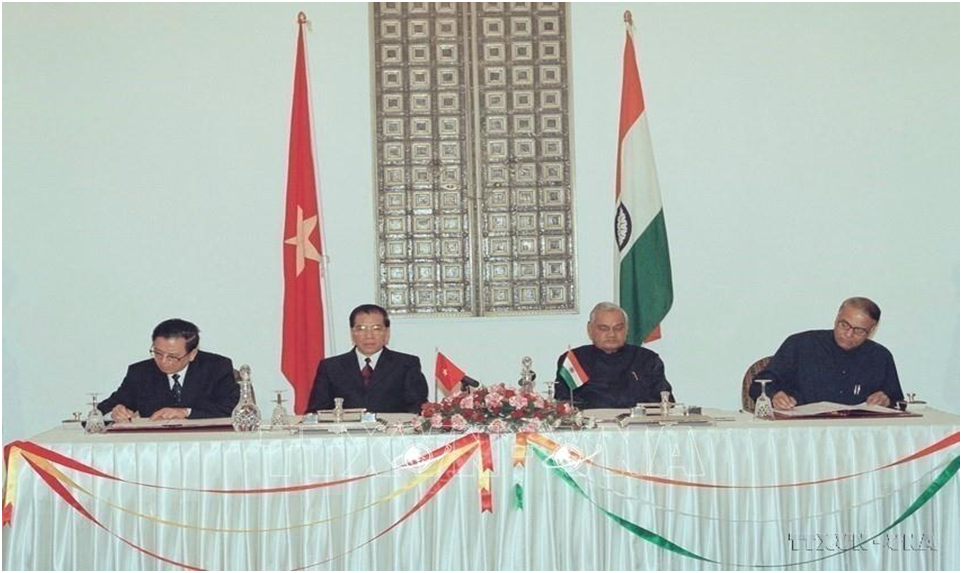
In 2003, both sides issued a joint declaration outlining a framework for comprehensive cooperation in the 21st century. Another breakthrough followed in 2007, when Vietnam and India upgraded their relationship to a Strategic Partnership, significantly expanding cooperation in diplomacy, defence and security, science and technology, as well as trade and investment. Throughout this period, political and diplomatic cooperation remained the central pillar underpinning the partnership.
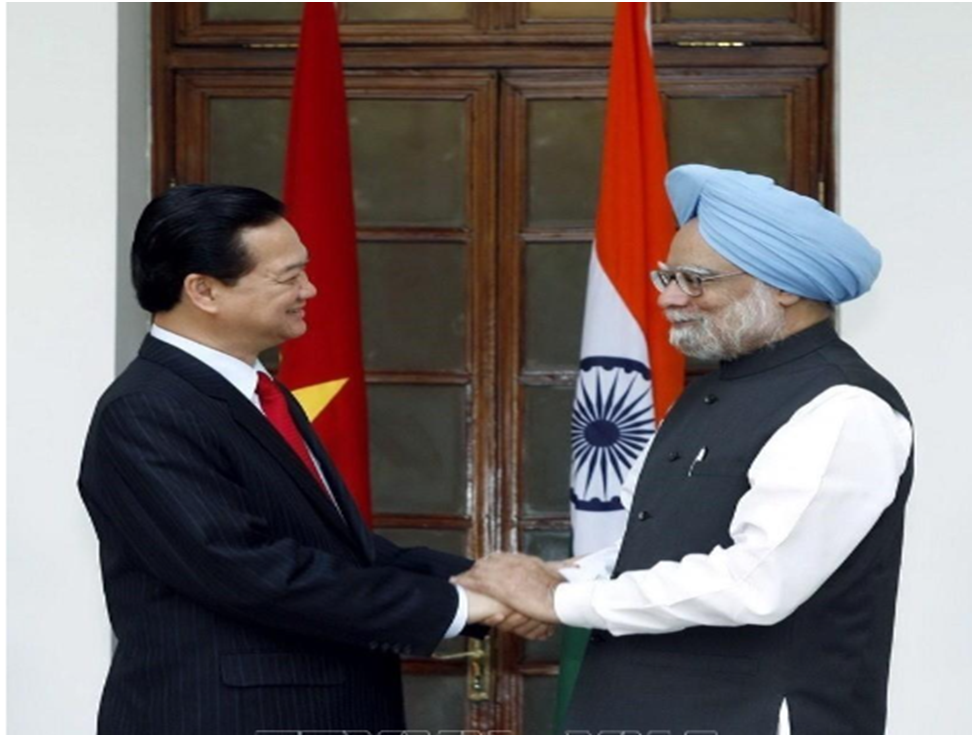
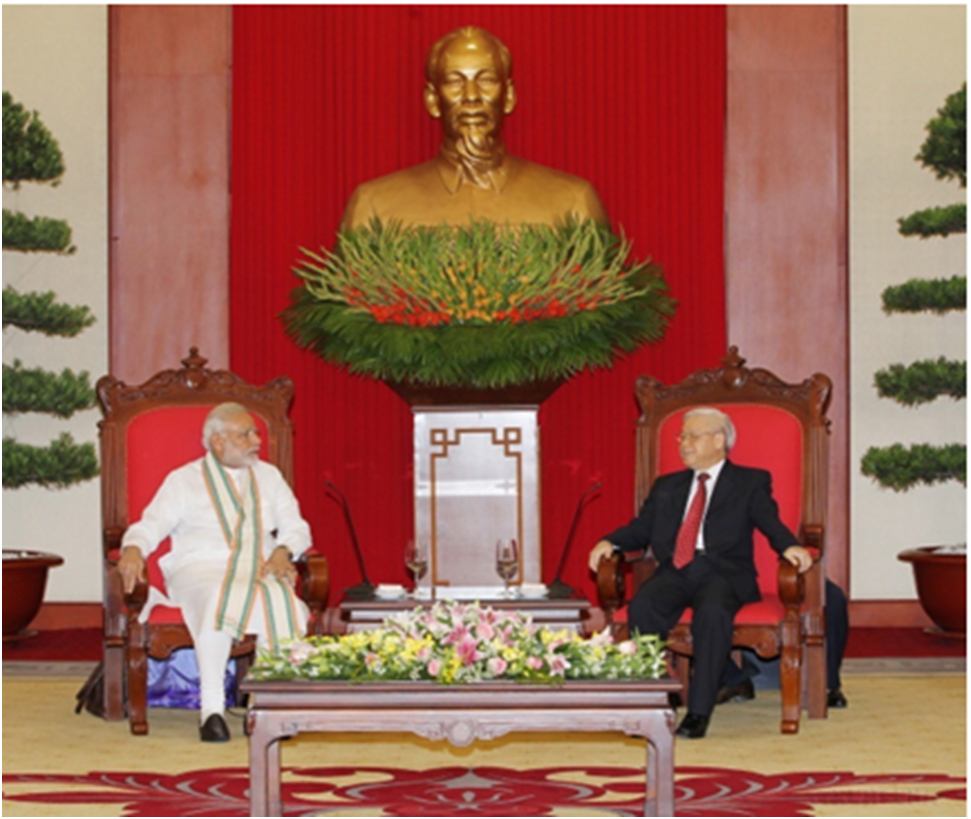
The most notable milestone was recorded in September 2016, following Prime Minister Narendra Modi’s visit to Vietnam, when both sides agreed to elevate bilateral ties to a Comprehensive Strategic Partnership. The upgrade reflected growing strategic convergence between the two countries and Vietnam’s increasingly important role in India’s Act East Policy.
Over the past decade, political and diplomatic engagement has remained the foundation and driving force of Vietnam–India relations. The two countries have maintained regular high-level exchanges through Party-to-Party engagement, state diplomacy and people-to-people diplomacy. Vietnam’s Communist Party has also strengthened ties with major political forces in India, including the Bharatiya Janata Party (BJP), the Indian National Congress (INC), and left-wing parties such as the Communist Party of India (CPI) and CPI(M). Across India’s political spectrum, strengthening ties with Vietnam is widely regarded as a consistent, stable and long-term strategic priority.
Beyond bilateral cooperation, Vietnam and India have also enhanced coordination at regional and multilateral forums. Vietnam’s active role within ASEAN, combined with India’s expanding presence and engagement in the Indo-Pacific, has created strong strategic complementarity, contributing to deeper cooperation and reinforcing the regional standing of both countries.
Defence and security cooperation has increasingly emerged as a strategic pillar of the partnership. Both sides have strengthened dialogue mechanisms, expanded training cooperation, enhanced capacity-building programmes and promoted maritime security coordination. These efforts reflect shared interests in maintaining regional stability, ensuring maritime safety, and safeguarding freedom of navigation along major international sea lanes.
At the same time, cooperation in culture, education and people-to-people exchanges has continued to play an important role in strengthening bilateral ties and building a solid social foundation for the partnership. In the field of science and technology, cooperation has advanced through programmes focusing on information technology, satellite data processing, biotechnology, the peaceful use of nuclear energy and digital capacity building. India has also supported Vietnam in training high-tech human resources and expanding technical cooperation, further reinforcing Vietnam’s development ambitions.
After ten years, the Vietnam–India Comprehensive Strategic Partnership has evolved into a broad and multidimensional framework, combining political trust, defence-security engagement and economic cooperation, while opening significant potential for expanded collaboration in science, technology and innovation.
Vietnam’s Party General Secretary and President To Lam’s visit marks a new era of cooperation in Vietnam–India relations
Vietnam’s Party General Secretary and President To Lam’s visitis widely seen as highly significant, not only as a continuation of achievements recorded over the past decade of the Comprehensive Strategic Partnership, but also as a key milestone expected to usher in a new era of Vietnam–India cooperation. In recent years, economic engagement has gained renewed momentum and has emerged as one of the most dynamic pillars of the bilateral relationship.
Bilateral trade has expanded strongly, reaching approximately USD 16.5 billion in 2025, the highest level ever recorded. This figure highlights the deepening connectivity between the two economies and underscores Vietnam’s increasingly important role in India’s strategy to expand supply chains and economic linkages within ASEAN.
Vietnam and India are also widely seen as possessing strong complementary advantages. Vietnam has emerged as an important manufacturing and export hub integrated into global value chains, while India remains one of the world’s fastest-growing major economies, supported by a vast domestic market, strong technological capabilities and significant potential in high-quality services.
This complementarity offers promising prospects for expanded cooperation in key future-oriented sectors such as digital transformation, artificial intelligence, semiconductors, renewable energy, pharmaceuticals, high-quality services, logistics, smart manufacturing and innovation ecosystems. The growing interest of Indian enterprises in Vietnam’s industrial base and export markets, alongside Vietnam’s increasing engagement with India’s technology-driven economy, is expected to generate fresh momentum for stronger two-way investment flows.
Meanwhile, science and technology cooperation is forecast to become a particularly prominent pillar in the next phase of bilateral relations. With India’s strengths in information technology, space research, biotechnology and innovation, combined with Vietnam’s goal of enhancing its position in global value chains, the two countries are well-positioned to expand joint research, promote technology transfer and strengthen industrial development capabilities.
Against this backdrop, Vietnam’s Party General Secretary and President To Lam’s visitis considered a strategic opportunity to set new directions for bilateral cooperation. The visit is expected to send strong political signals, further strengthen long-term strategic trust, and create fresh impetus for cooperation in trade, investment and economic connectivity. It may also help establish new frameworks for collaboration in high-tech industries, innovation-driven sectors and emerging future economies.
The visit carries not only symbolic diplomatic significance but also substantial practical value. Strengthening political consensus, expanding cooperation in new industries, and enhancing supply chain linkages could play an important role in shaping the trajectory of Vietnam–India relations in the coming decade.
As the Indo-Pacific increasingly becomes the centre of global strategic attention, Vietnam’s geo-economic position and dynamic growth, combined with India’s rising regional influence, are making the bilateral partnership more relevant than ever. Both countries share strong interests in maintaining a peaceful and stable regional order based on international law, while also strengthening economic resilience through supply chain diversification and deeper regional connectivity.
In the coming years, Vietnam–India relations are expected to enter a new phase of cooperation, moving beyond traditional areas and focusing more strongly on high-impact sectors that can drive sustainable growth, foster technological innovation and deliver long-term strategic benefits for both sides. Vietnam’s Party General Secretary and President To Lam’s visit to India therefore not only marks the tenth anniversary of the Comprehensive Strategic Partnership, but is also widely seen as a landmark event laying the groundwork for a deeper, more substantive and future-oriented era of cooperation between Vietnam and India.
