

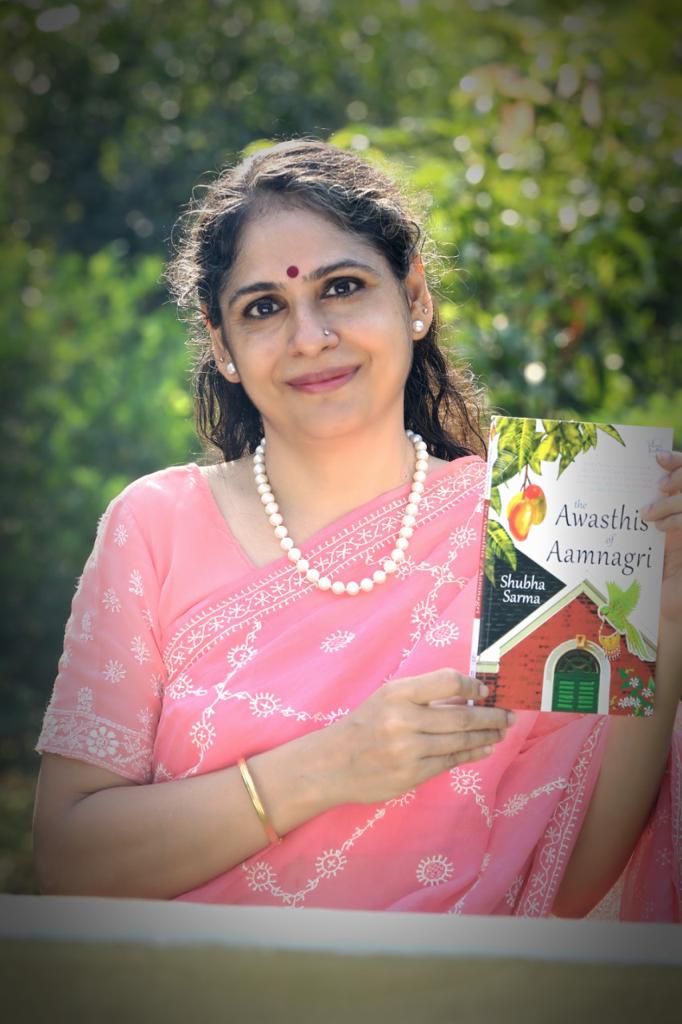
Bhubaneswar, Nov 26 Shubha Sarma, civil servant and author, is back with her second literary work – “The Awasthis of Aamnagri.”
Published by Niyogi Books, “The Awasthis of Aamnagri” is a novella set in the Hindi heartland that also takes Sarma back to her roots in Lucknow. The book traces life of the middle class family – as the name would suggest – in a setting of the 70s and 80s.
It begins with the Awasthis embarking on the quest for a bunglow and what follows in their individual lives as well as the joint-family system is told by Sarma with subtle humour and satire, often harking back longingly to the slow-paced life in her growing-up days.
An Odisha cadre IAS officer, Sarma’s debut book “Fly on the Wall & Other Stories,” an anthology of 13 short stories, was released in 2013 to critical acclaim.
In “The Fly on the Wall & Other Stories”, Sarma looked at varied subjects – from up-market, urban settings to the depths of rural Orissa and areas of civil strife and deep social unrest, stringing together anxious house-wives, over-imaginative teenagers and men and women in the sunset of their lives.
In “The Awasthis of Aamnagar”, she captures a different world in a different mood. “Aamnagri” where the plot is set refers to “Aam” or mango which Sarma uses as a metaphor for the sweet-sour-messy middle class life in an emerging urban landscape.
AUTHOR’S QUOTES : “In today’s fast paced routines, a strong thread of nostalgia runs through our lives, especially in those above the age of thirty-five. It emerges in the most unlikely places and at the most unlikely times: whatsapp forwards that reminisce about the good old days, twitter trends and handles that specifically speak about growing up in the 1970s, 1980s or even 1990s, an old ad jingle or a brand, anything that triggers fond memories. I wanted to capture that period in our lives when summer vacations were long, languorous and full of a game of cards, when the greatest worry was not losing all your contacts stored on your smart phone.”
Sarma, now Commisioner-cum-Secretary, Handloom, Textiles and Handicrafts Department with Government of Odisha, looks at two target groups for her new book: the 35-plus readers fondly looking back at the past and trying to ensure that his/her children read it to understand how they grew up as well. She also has on mind the young reader who enjoys going into the past to explore a different time.
“Just as for every Simba, there is a Kalank, there are readers who enjoy an old-fashioned setting. Though the book is primarily set in the Hindi heartland, the structure of Indian families and the tussles within the family are fairly universal, from Punjab (if not Kashmir) to Kanyakumari,” she sets the context.
She deliberately chose English to reach out to a wider audience but says she intends to translate it into other languages subsequently.
