

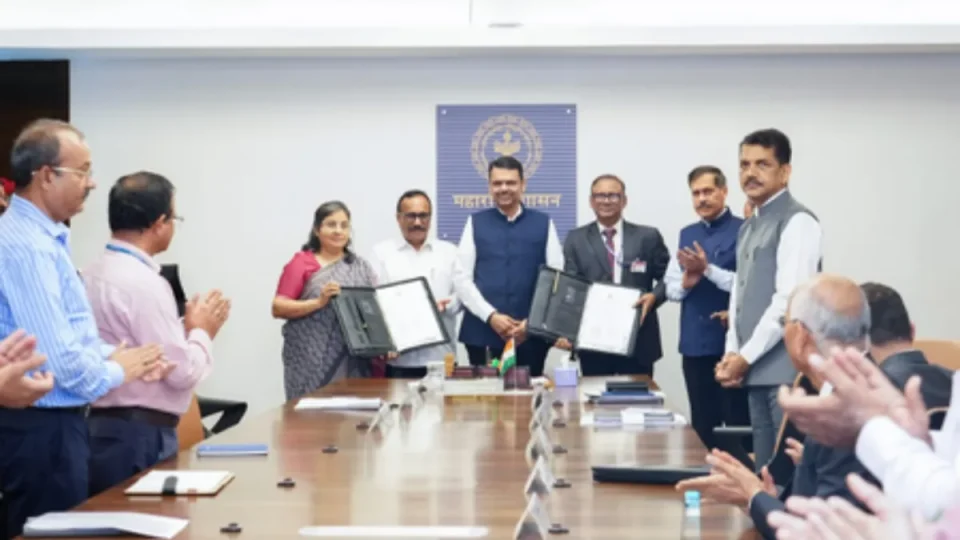
Mumbai, May 20: The Maharashtra government on Tuesday signed Memorandums of Understanding (MoUs) with NTPC Limited and Lalitpur Power Generation Company Limited of the Bajaj Group to develop power projects with a combined generation capacity of 25,400 MW.
The proposed projects involve an estimated investment of Rs 6.5 lakh crore and are expected to create over 1.23 lakh jobs, according to the state government.
Renewable Energy Minister Atul Save said the developers would undertake due diligence and field surveys to finalise project locations in Ratnagiri and Sindhudurg districts.
He said the companies could adopt technologies such as Small Modular Reactors (SMRs), Pressurised Heavy Water Reactors, Light Water Reactors, or Fast Breeder Reactors, depending on findings from detailed project reports.
Save said Maharashtra’s initiative aligns with the Centre’s target of adding 1,00,000 MW of nuclear power capacity by 2047, supporting the country’s Viksit Bharat vision and long-term net-zero emission goal for 2070.
“With today’s MoUs, projects with a generation capacity of 25,400 MW will be developed. The government will provide all required support, including approvals and clearances,” he said.
According to the Chief Minister’s Office, state-run NTPC will invest Rs 1 lakh crore to establish projects with a power generation capacity of 7,200 MW, creating around 5,000 jobs.
Lalitpur Power Generation Company Limited, part of the Bajaj Group, plans to invest Rs 2 lakh crore in Maharashtra to develop 5,000 MW of generation capacity and create nearly 3,000 jobs.
Chief Minister Devendra Fadnavis said investments in clean energy would strengthen efforts to make India an energy-abundant nation while advancing the country’s net-zero ambitions.
“PM Modi has set a goal to make India energy-abundant and achieve net-zero carbon emissions. Maharashtra is making every effort to contribute to this objective,” Fadnavis said during the MoU signing ceremony.
He assured full state support to companies investing in Maharashtra’s nuclear power sector and highlighted nuclear energy as a key pillar of clean energy generation.
Fadnavis said investments in the sector would accelerate Maharashtra’s power generation capacity and create significant employment opportunities, while urging companies to expedite project implementation and site surveys.
Meanwhile, a government official said the proposed SHANTI Act, which seeks to replace the Atomic Energy Act of 1962, aims to open India’s nuclear sector to private participation and global collaboration.
The proposed legislation is expected to establish a clearer framework for foreign direct investment and revise supplier liability provisions to attract international technology providers, the official added.
