

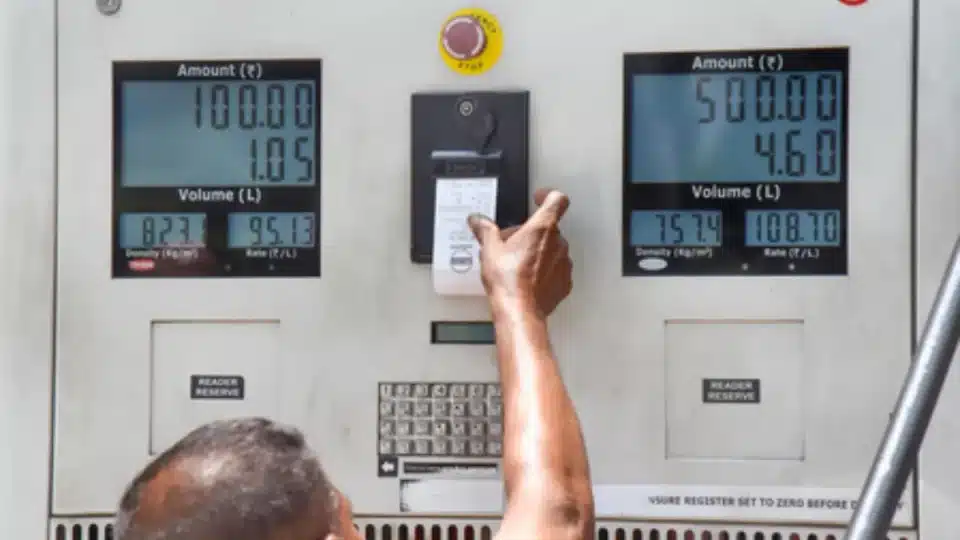
The Centre has imposed temporary restrictions on diesel sales at retail fuel stations to prevent hoarding and black marketing, while public sector oil marketing companies (OMCs) continue to absorb losses of nearly Rs 500 crore per day. The new 90-day regulation limits diesel purchases to 200 litres per customer per day and requires bulk consumers to procure fuel through designated channels.
✅ Government introduces temporary diesel sale restrictions for 90 days.
✅ Diesel purchases capped at 200 litres per customer or vehicle per day.
✅ Bulk consumers barred from buying diesel at retail fuel stations.
✅ PSU oil companies absorbing losses of around Rs 500 crore daily.
✅ Retail diesel reportedly priced around Rs 40 per litre lower than bulk diesel.
✅ Move aims to prevent hoarding, diversion and black marketing.
✅ States directed to take action against unauthorized fuel resale.
New Delhi, June 12: The Central Government has introduced temporary restrictions on diesel sales through retail fuel outlets to prevent hoarding, curb black marketing and ensure uninterrupted fuel availability for ordinary consumers amid rising pressure on public sector oil marketing companies (OMCs).
The Ministry of Petroleum and Natural Gas announced the ‘Motor Spirit and High-Speed Diesel (Temporary Regulation of Supply through Retail Outlets) Order, 2026’, which will initially remain in force for 90 days.
The decision comes at a time when state-owned fuel retailers are reportedly absorbing losses of nearly Rs 500 crore per day on the sale of petrol, diesel and domestic LPG to shield consumers from the impact of elevated international energy prices.
Under the new regulations, retail fuel outlets can supply diesel only directly into vehicle fuel tanks or Petroleum and Explosives Safety Organisation (PESO)-approved containers.
The government has also imposed a maximum purchase limit of 200 litres of diesel per day per customer or vehicle.
In addition, diesel purchased from retail outlets cannot be resold under any circumstances.
The ministry clarified that industrial, institutional, commercial and direct consumers will no longer be permitted to purchase diesel from retail fuel stations.
Instead, such consumers must source their fuel requirements through designated consumer pumps and approved bulk supply channels.
According to the government, the restrictions became necessary after an unusual surge in diesel demand was observed at PSU-operated retail outlets.
Officials noted that several bulk consumers had increasingly shifted their purchases to public sector fuel stations because retail diesel prices remained significantly lower than bulk fuel prices.
Retail diesel is currently estimated to be around Rs 40 per litre cheaper than bulk diesel, creating a strong incentive for commercial consumers to procure fuel through retail outlets.
The resulting demand imbalance has placed additional financial pressure on PSU oil marketing companies such as Indian Oil Corporation (IOC), Bharat Petroleum Corporation Limited (BPCL) and Hindustan Petroleum Corporation Limited (HPCL).
Despite volatility in global crude oil markets and supply disruptions linked to geopolitical tensions in West Asia, these companies have continued to provide price support to consumers.
Government data for May 2026 showed a substantial increase in diesel sales through public sector retail outlets.
According to the ministry, 327 districts recorded diesel sales growth exceeding 10 per cent compared to the same period last year, while 80 districts reported growth of more than 30 per cent.
In contrast, private oil marketing companies reportedly experienced a 58 per cent decline in high-speed diesel (HSD) sales during the same period due to higher pricing.
The ministry also revealed that authorities had identified instances where large quantities of diesel were being purchased in jerry cans and subsequently resold in unauthorized markets.
Such practices raised concerns regarding black marketing, fuel diversion and misuse of retail fuel pricing mechanisms, prompting immediate government intervention.
To ensure compliance, oil marketing companies and fuel station operators have been directed to closely monitor diesel sales and prevent attempts to circumvent the restrictions.
State governments and Union Territories have also been instructed to take strict action against hoarding, illegal fuel trading and unauthorized diversion of petroleum products.
The government emphasized that the temporary measures are intended to protect genuine consumers, maintain fuel availability and support orderly fuel distribution during a period of heightened global energy uncertainty.
The government’s decision to restrict diesel sales reflects growing efforts to prevent hoarding and protect consumers while public sector oil companies continue absorbing substantial losses. By limiting bulk purchases, curbing unauthorized resale and directing commercial buyers to designated supply channels, authorities aim to maintain fuel availability and stabilize distribution during ongoing global energy market volatility.
FAQ Section
Q1. What is the new diesel purchase limit?
Customers can purchase a maximum of 200 litres of diesel per day from retail fuel outlets.
Q2. How long will the restriction remain in force?
The order is initially valid for 90 days unless extended, modified or withdrawn.
Q3. Can commercial consumers buy diesel from retail outlets?
No. Industrial, institutional and commercial consumers must procure diesel through designated consumer pumps and approved channels.
Q4. Why has the government imposed these restrictions?
The move aims to prevent hoarding, black marketing, fuel diversion and excessive bulk purchases from retail outlets.
Q5. How much are PSU oil companies reportedly losing daily?
According to the government, public sector oil marketing companies are absorbing losses of around Rs 500 crore per day on petrol, diesel and LPG sales.
Related posts :
 India Restricts Bulk Diesel and Petrol Sales at Retail Pumps for 90 Days Amid Fuel Supply Concerns
 Petrol Diesel Adequately Available Across India, Petroleum Ministry
 Government Bars PNG Users from Holding LPG Cylinders to Optimise Supply & Step up LPG Production
 Fuel prices hiked again for the 4th time ; petrol crosses Rs 102, diesel at Rs 95.20/litre in Delhi
 India Maintains Stable LPG Supply Amid West Asia Crisis, Delivers 1.43 Crore Cylinders in Three Days
More Than 80,400 Consumers Shift From LPG to PNG as Government Accelerates City Gas Network Expansion
India Maintains Stable LPG Supply Amid West Asia Crisis, Delivers 1.43 Crore Cylinders in Three Days
More Than 80,400 Consumers Shift From LPG to PNG as Government Accelerates City Gas Network Expansion
