

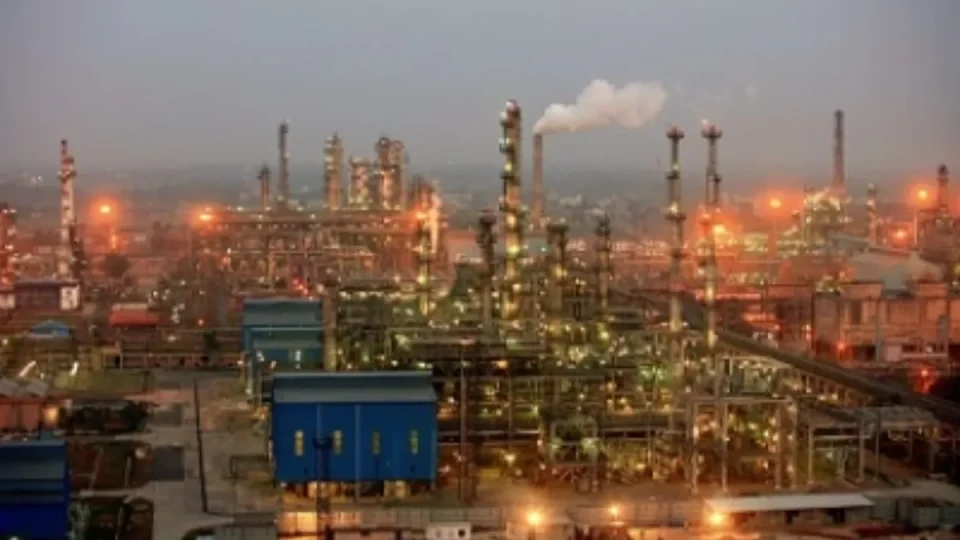
New Delhi, June 05: Amid continuing geopolitical tensions in West Asia, the Centre on Thursday reassured citizens that the country’s energy supply chain remains stable, with all refineries operating at high capacity and sufficient inventories of crude oil and petroleum products available to meet domestic demand.
The government also announced a major intervention to support the aviation sector, with the Union Cabinet approving a one-time budgetary support mechanism of up to Rs 10,000 crore for Aviation Turbine Fuel (ATF) price stabilisation.
Refineries Operating at High Capacity
Officials said all domestic refineries are functioning at elevated capacity levels and maintaining adequate crude oil inventories to ensure uninterrupted fuel production.
The government confirmed that sufficient stocks of:
- Petrol
- Diesel
- Liquefied Petroleum Gas (LPG)
are being maintained nationwide to meet consumer and industrial demand despite volatility in global energy markets.
The assurance comes amid concerns over supply disruptions and rising energy prices linked to the evolving situation in West Asia.
Cabinet Approves Rs 10,000 Crore ATF Stabilisation Mechanism
In a significant move to protect the aviation sector from global fuel price volatility, the Union Cabinet approved a support mechanism of up to Rs 10,000 crore for scheduled Indian airlines.
The initiative aims to stabilise ATF prices and reduce the impact of sharp fluctuations in international fuel markets caused by the ongoing geopolitical crisis.
Officials said the measure is intended to ensure operational stability for airlines while protecting passengers from sudden airfare increases.
How the ATF Stabilisation Scheme Will Work
Under the approved framework:
- The government will provide an interest-free advance to oil marketing companies (OMCs).
- OMCs will supply ATF to participating airlines at predetermined and stable prices.
- The arrangement will cover both domestic and international operations.
When global ATF prices rise above benchmark levels, the support corpus will compensate OMCs for the difference.
Conversely, when fuel prices decline, the excess support amount will be recovered and returned to the Consolidated Fund of India through a transparent reconciliation mechanism.
Officials stressed that the arrangement is a temporary stabilisation measure rather than a fuel subsidy.
Relief for Airlines Facing Rising Fuel Costs
Aviation Turbine Fuel remains one of the largest cost components for airlines.
The recent surge in international fuel prices, coupled with longer flight routes and operational challenges arising from regional instability, has increased financial pressure on carriers.
The government believes the fixed-price mechanism will provide:
- Greater fuel cost predictability
- Improved operational planning
- Enhanced financial stability for airlines
- Reduced exposure to global price shocks
This is expected to help airlines maintain services without passing the entire burden of rising fuel costs to passengers.
Measure Expected to Moderate Airfare Hikes
Officials said one of the primary objectives of the scheme is to prevent sudden spikes in airfares.
The stabilisation mechanism is expected to benefit:
- Families travelling for personal reasons
- Students
- Business travellers
- Tourists
By reducing volatility in airline operating costs, the government hopes to ensure more predictable ticket pricing during a period of heightened uncertainty.
Supporting Regional Connectivity and Economic Growth
The Centre noted that stable airline operations are critical for maintaining air connectivity across the country, particularly for smaller cities and remote regions.
The initiative is expected to support:
- Regional air routes
- Tourism growth
- Business travel
- Logistics and cargo services
- Employment generation in aviation-related sectors
Officials said the measure would also optimise utilisation of airport infrastructure developed under the government’s regional connectivity programme.
Boost for UDAN and Aviation Ecosystem
The government highlighted that the scheme would strengthen the broader aviation ecosystem by supporting infrastructure developed under the UDAN Scheme.
Stable airline operations are expected to enhance connectivity to underserved regions and contribute to inclusive economic development.
The initiative also supports sectors linked to aviation, including hospitality, tourism, logistics, maintenance services, and airport operations.
Key Highlights
- Government assures adequate crude oil and fuel inventories despite West Asia tensions.
- All Indian refineries operating at high capacity.
- Sufficient stocks of petrol, diesel, and LPG available nationwide.
- Union Cabinet approves ATF stabilisation mechanism worth up to Rs 10,000 crore.
- Interest-free support to oil marketing companies to stabilise airline fuel prices.
- Scheme designed to prevent sudden airfare increases.
- Measure expected to support regional connectivity and airline operations.
- Aviation, tourism, and logistics sectors likely to benefit.
