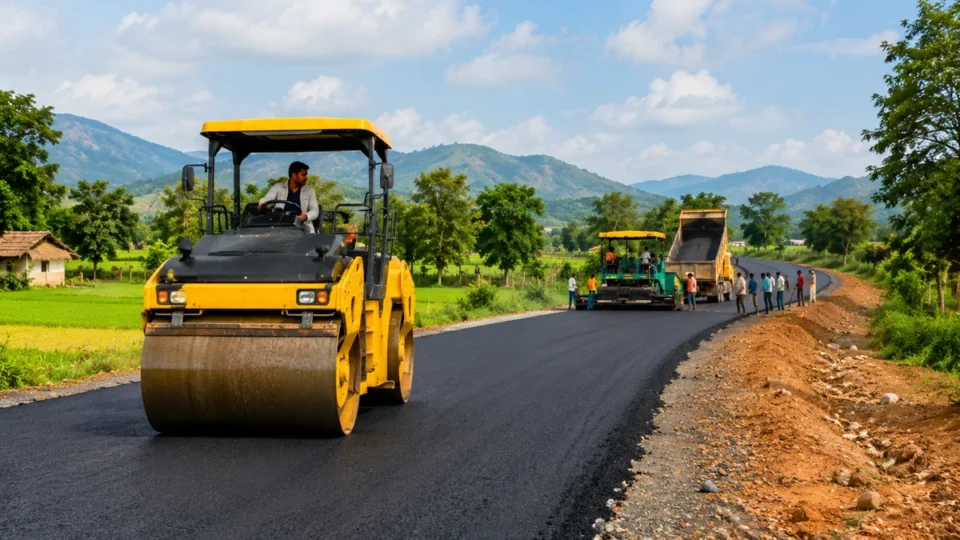
The Central Government has earmarked Rs 18,907 crore for the construction of 26,474 kilometres of rural roads during FY 2026-27 under the Pradhan Mantri Gram Sadak Yojana (PMGSY) and related rural connectivity schemes. The initiative aims to provide all-weather road connectivity to remaining unconnected habitations, including vulnerable tribal areas and Left Wing Extremism-affected districts.
Key Highlights
✅ Rs 18,907 crore allocated for rural roads in FY27
✅ 26,474 km of roads planned under PMGSY and related schemes
✅ Focus on unconnected villages and PVTG habitations
✅ States directed to fast-track DPRs and pending projects
New Delhi,June 18 In a major push to strengthen rural infrastructure and connectivity across the country, the Centre has allocated Rs 18,907 crore for the construction of 26,474 kilometres of rural roads during FY 2026-27 under the Pradhan Mantri Gram Sadak Yojana (PMGSY) and other rural road connectivity initiatives.
Also Read
- Centre sanctions Rs 114 crore project for rural roads in Tripura
- World Bank approves $452 mn for Assam to improve connectivity in rural areas
- 1,954 roads, 86 bridges completed in J&K, Ladakh under PMGSY
The announcement was made during a high-level review meeting convened by the Ministry of Rural Development to assess state-wise physical and financial progress under PMGSY and the Road Connectivity Project for Left Wing Extremism Affected Areas (RCPLWEA).
The meeting, chaired by Rohit Kansal, Secretary, Department of Rural Development, Ministry of Rural Development reviewed implementation progress and future targets with a focus on ensuring universal rural connectivity. States were instructed to expedite the completion of all remaining unconnected habitations under PMGSY-I and the PM-JANMAN initiative, particularly in areas inhabited by Particularly Vulnerable Tribal Groups (PVTGs).
During the review, states reaffirmed their commitment to accelerating project execution, enhancing infrastructure quality, and ensuring that the benefits of all-weather road connectivity reach every eligible habitation across India.
The Secretary stressed the importance of achieving saturation in rural road connectivity and urged states to speed up the preparation of Detailed Project Reports (DPRs), remove execution bottlenecks, and complete pending projects within stipulated timelines.
Recognising the strategic significance of road infrastructure in Left Wing Extremism (LWE)-affected districts, the Ministry directed states to maintain close coordination with implementing agencies and ensure timely completion of all sanctioned works.
States also presented targeted action plans and assured the Ministry that pending projects and annual targets would be completed as scheduled. The Ministry further called for stronger field-level inspections, enhanced quality monitoring systems, and robust oversight throughout project implementation.
In addition, state governments were advised to address challenges related to land acquisition, expedite forest clearance proposals, and ensure compliance with project milestones to avoid delays.
The enhanced investment in rural roads is expected to improve connectivity, boost economic opportunities, facilitate access to essential services, and contribute to inclusive development across remote and underserved regions of the country.
Conclusion
The Centre’s allocation of Rs 18,907 crore for rural roads in FY27 underscores its commitment to expanding rural connectivity and inclusive development. By focusing on unconnected villages, tribal habitations, and LWE-affected areas, the government aims to ensure that reliable all-weather road access reaches every eligible community across India.