

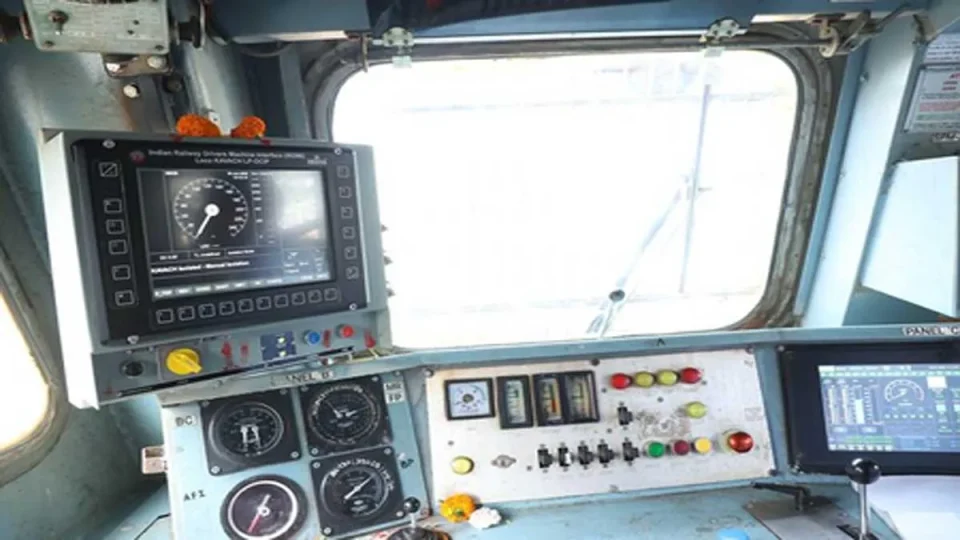
Indian Railways has approved a ₹206 crore project to deploy Kavach Version 4.0 on 680 route kilometres of the Rewari-Delhi and Shakurbasti-Bathinda sections under Northern Railway. The indigenous Automatic Train Protection system will enhance rail safety, prevent collisions and improve operational efficiency.
Key Highlights
- Indian Railways sanctions ₹206 crore for Kavach 4.0 deployment on 680 route kilometres.
- The project covers Rewari-Delhi, Shakurbasti-Bathinda and feeder branch lines under Northern Railway.
- Kavach prevents Signal Passed at Danger (SPAD) incidents and train collisions.
- The indigenous safety system will improve operational efficiency, reliability and all-weather train operations.
New Delhi, July 10: Indian Railways has approved a ₹206 crore project for the deployment of Kavach Version 4.0, India’s indigenous Automatic Train Protection (ATP) system, across 680 route kilometres (RKm) of the Rewari-Delhi and Shakurbasti-Bathinda sections, including feeder branch lines, under the Delhi Division of Northern Railway. The project represents another major milestone in the nationwide expansion of advanced railway safety infrastructure.
The approved project is part of Indian Railways’ ongoing nationwide rollout of Kavach, which is being implemented across high-density and strategically important railway routes. The initiative supports the government’s vision of creating a safer, smarter and technology-driven railway network capable of handling increasing passenger and freight traffic.
Kavach is India’s indigenously developed Automatic Train Protection system that significantly improves railway safety by preventing Signal Passed at Danger (SPAD) incidents and reducing the risk of train collisions. The system continuously monitors train movement and automatically applies brakes whenever a loco pilot fails to respond to safety warnings, ensuring safer train operations.
The advanced Kavach Version 4.0 also enables trains to operate safely at the maximum permissible speed while maintaining operational safety. In addition, it enhances railway operations during adverse weather conditions such as dense fog, where visibility is limited, thereby improving punctuality and reliability.
The deployment of Kavach on these key Northern Railway corridors is expected to strengthen passenger safety, improve operational efficiency, reduce human error and increase the reliability of both passenger and freight train services. The technology will also support more efficient utilisation of railway infrastructure while enabling smoother traffic management.
As Indian Railways continues its modernization drive, the expansion of Kavach across strategic routes underscores the organisation’s commitment to world-class railway safety, indigenous innovation and digital transformation. The project reinforces India’s efforts to build a modern rail network equipped with advanced safety technologies for the future.
Conclusion
The ₹206 crore Kavach 4.0 project will significantly enhance railway safety, improve operational efficiency and accelerate the adoption of indigenous technology across Northern Railway’s critical routes.
