

http://www.youtube.com/embed?listType=playlist&list=UU7ANGiEId9m-jrT966_UfZA
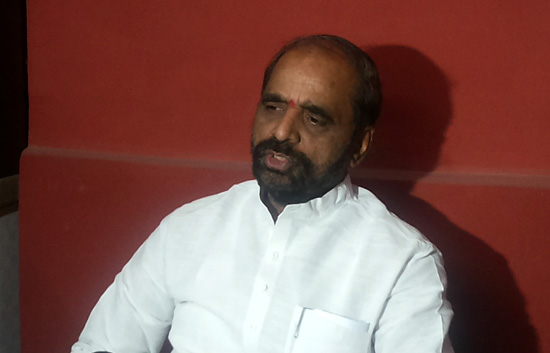
New Delhi, May 15 Approval to a comprehensive New Urea Policy 2015 for the next four financial years has been given by the Union Cabinet. This policy has multiple objectives and would reduce the subsidy burden on the Government, said the Minister of State for Chemicals and Fertilizers, Hansraj Ahir, here today.
Addressing a press conference Ahir informed about policy’s multiple objectives of maximizing indigenous urea production and promoting energy efficiency in urea units to reduce the subsidy burden on the Government. Adding further, he said savings in energy shall reduce the carbon-footprint making it environment friendly.
It will enable the domestic urea sector having 30 urea producing units, to become more energy efficient, would rationalize the subsidy burden and would incentivize urea units to maximize their production. The policy will ensure timely supply of urea to farmers at same Maximum Retail Price (MRP) with lesser financial burden on the exchequer. It will also reduce import dependency in the urea sector, said Ahir.
Informing further, the minister said that urea units would adopt best available technology in the world and will become globally more competitive there by making farmers, the urea industry and Government of India benefit from the New Urea Policy.
He added that, the Government had already decided in January to allow urea producers to produce neem coated urea up to 100 percent of production and making it mandatory to produce a minimum of 75 percent of domestic urea as neem coated, so that farmers are benefited. Neem coated urea is required less in quantity with same plot size and gives higher crop yields.
The MRP of urea for the farmers has been kept the same at Rs. 268/- per bag of 50 kg excluding local taxes. Farmers have to pay an additional price of only Rs.14/- per bag of neem coated urea, said the minister.
Ahir informed, earlier the Government had also decided to revive closed urea units at Gorakhpur in Uttar Pradesh and Barauni in Bihar to produce additional 26 lakh tonnes. Joint venture agreements among various stakeholders have been signed for revival of closed urea units in Odisha and Telangana. All the measures taken in this direction will help reduce import dependency of India for urea drastically. Presently, India is importing about 80 lakh metric tonnes of urea out of total demand of 310 lakh metric tonnes.
Subsidy would be payable to suppliers only after fertilizers are received in the districts and final settlement of subsidy claims will continue to be done only after acknowledgement of receipt of fertilizers by retailers. Quality certificates are to be given by the respective State Governments within six months from the receipt of fertilizers. If quality is sub-standard, subsidy will not be given to fertilizer suppliers.
