

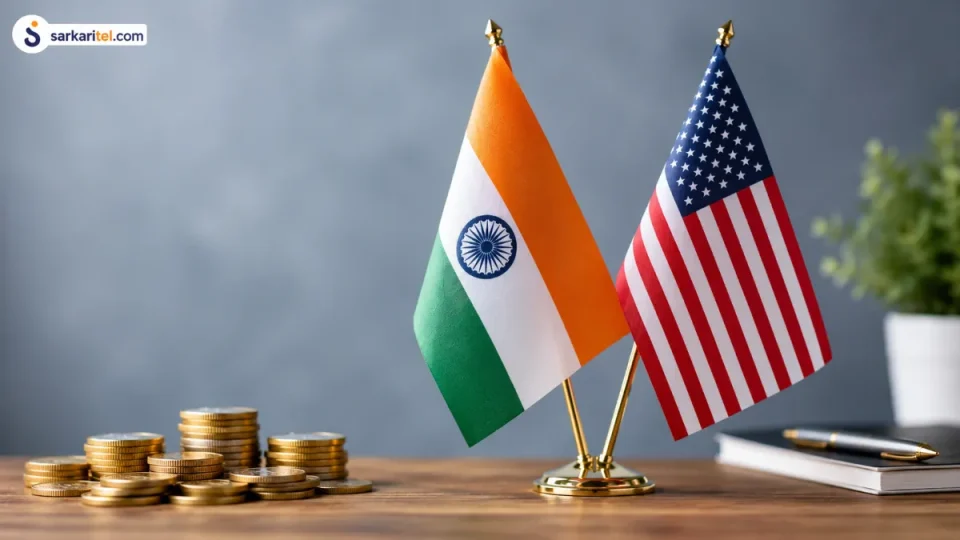
The United States has imposed a 10% tariff on imports from India under a Section 301 forced labour investigation, replacing the temporary global tariff introduced earlier this year. The move affects 60 trading partners and comes as India and the US continue negotiations on a broader bilateral trade agreement.
Key Highlights
- US imposes a 10% Section 301 tariff on imports from India over forced labour concerns.
- The measure covers 60 countries representing over 99% of US imports.
- India secured a lower tariff than the initially proposed 12.5% rate.
- The decision comes amid ongoing India-US trade agreement negotiations.
The United States has announced a 10% tariff on imports from India following a months-long Section 301 investigation into forced labour practices, introducing fresh trade barriers even as bilateral trade talks continue. The new duty replaces the temporary 10% global tariff that expired this week and forms part of a wider US trade enforcement strategy.
Washington has imposed the new tariffs on around 60 trading partners, including India, China, the European Union, the United Kingdom, Canada, Japan, Pakistan, Bangladesh and Sri Lanka, alleging they failed to adequately prevent imports linked to forced labour. Together, these countries account for more than 99% of total US imports.
India avoided the 12.5% tariff initially proposed during the investigation after government officials and industry organisations defended the country’s legal framework, highlighting constitutional provisions prohibiting forced labour and measures already in place to regulate supply chains. The final 10% tariff puts India in the same category as several South Asian and Latin American economies.
Announcing the decision, US Trade Representative Jamieson Greer said the tariffs are intended to address both human rights concerns and unfair trade practices while encouraging trading partners to strengthen enforcement against goods produced using forced labour. The US administration described the action as part of a broader effort to improve global labour standards.
The tariff decision comes at a sensitive stage in India-US trade negotiations. Earlier this year, both countries agreed to a framework aimed at reducing tariffs on Indian exports from 50% to 18%, while India proposed expanding purchases of American products and providing greater market access for selected US exports. However, subsequent legal developments in the United States have created uncertainty over the implementation of that framework.
India also faces an additional challenge because it remains subject to two separate Section 301 investigations, unlike competitors such as Pakistan and Sri Lanka, which currently face only the forced labour inquiry. Trade experts believe this could affect India’s export competitiveness unless New Delhi secures preferential tariff treatment under the proposed interim trade agreement.
The US decision to impose a 10% Section 301 tariff on Indian imports adds a new dimension to bilateral trade relations, with the outcome of ongoing negotiations expected to determine India’s future competitiveness in the American market.
FAQs
1. Why has the US imposed a 10% tariff on India?
The tariff follows a Section 301 investigation into forced labour practices and applies to countries the US says have not effectively restricted imports linked to forced labour.
2. How many countries are affected by the new US tariffs?
The new tariff measures apply to 60 countries, representing more than 99% of US imports.
3. What tariff rate was initially proposed for India?
India was initially expected to face a 12.5% tariff, but the final rate was reduced to 10%.
4. Will the new tariff affect India-US trade negotiations?
The two countries continue negotiating a broader trade agreement, although tariff issues remain an important part of the discussions.
