

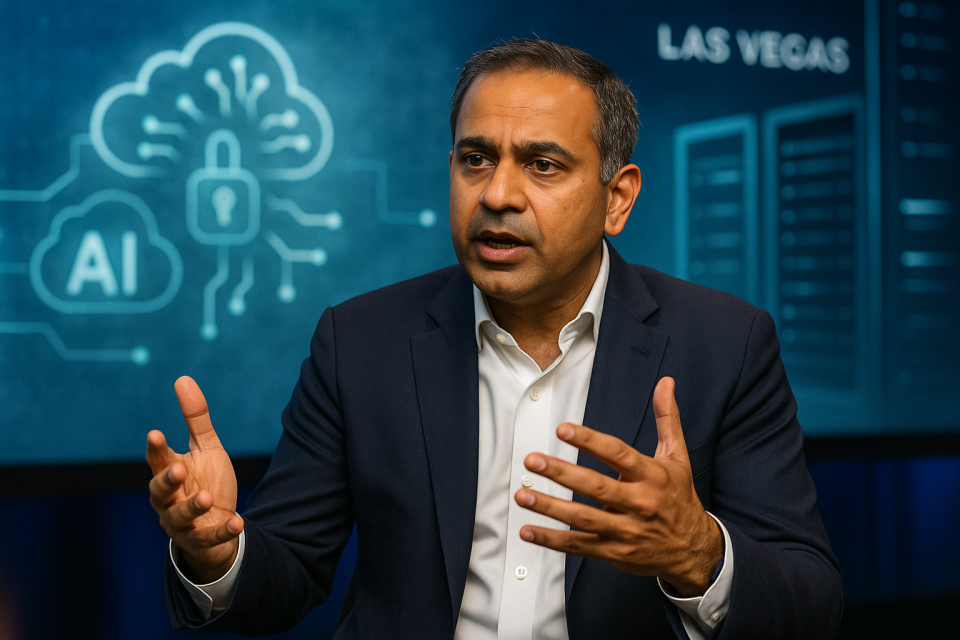
Washington, June 9 Artificial intelligence can propel India to the forefront of global tech leadership even without building its own frontier models, according to Dev Rishi, General Manager for AI at cyber resilience firm Rubrik. Speaking to IANS ahead of Rubrik’s annual Forward conference in Las Vegas, Rishi said enterprises are being held back less by AI capability and more by governance, security and compliance concerns.
“We’re in the very early innings of AI changing the world,” Rishi said, noting that the first wave of large language models was largely informational. He expects the next phase to be driven by systems that perform tasks and take actions inside organisations, a transition he describes as a move from generative AI to “adjunct AI”. That shift, he argued, will unlock measurable return on investment for businesses.
Rubrik is unveiling a new suite of AI-focused cyber resilience products designed to speed recovery after cyber attacks and to securely govern AI agents operating within enterprises. The company is also rolling out integrations for Anthropic’s Claude ecosystem and introducing agent-driven recovery capabilities, aimed at helping organisations automate incident response while maintaining strict guardrails.
“If you survey enterprise CIOs and CISOs, they’ll tell you the number one blocker to adopting AI is governance, guardrails and compliance,” Rishi said. “It’s actually not cost, it’s not orchestration, it’s not even quality.” He added that mitigating emerging risks from autonomous AI agents will require AI-native security controls: “In order to be able to use AI, you need to use AI itself to secure and govern those agents.”
On the global AI race, Rishi pushed back against a zero-sum narrative, predicting the technology will become ubiquitous and its benefits will compound over time. He drew a parallel with the evolution of the internet, suggesting AI’s long-term impact is likely to be “underhyped” today but transformative at scale.
Rishi, who was born in India and holds an Overseas Citizen of India card, said the country’s deep pool of technology talent and strong education system position it well for leadership. While acknowledging India has not matched the United States or China in foundation model development, he argued that is not essential for success. Instead, he sees India’s opportunity in building “harnesses, context and verticalised applications” that help organisations realise ROI faster—spanning sectors such as financial services, healthcare, public administration, and manufacturing.
Public sector use cases offer immediate promise, he added, with AI able to streamline document review, information synthesis and approval workflows where agencies face heavy backlogs. That, combined with robust governance and security frameworks, could accelerate adoption without sacrificing trust or compliance.
The rapid rise of generative AI since late 2022 has triggered a global race among governments and companies to deploy advanced models and AI-powered services. India has expanded its efforts to strengthen domestic AI capabilities while encouraging broader adoption across public services, education, healthcare and industry. Rishi’s message to enterprises and policymakers is clear: prioritise governance and security, and use AI to secure AI—because that is where adoption will either stall or scale.
Rubrik’s new offerings, showcased at Forward in Las Vegas, are aimed squarely at that inflection point, promising faster, safer recovery from attacks and tighter control over AI agents operating within critical business environments.
Related Articles
- India’s AI market to triple to $17 billion with 1.25 million professionals by 2027
- India, as fastest growing economy, is ideal investment destination: RBI Governor
- EVs likely to hit 30-35 pc of annual vehicle sales in India by FY30
- 21 Indian startups raise nearly $187 million this week
- Indian biotech startups launch 11 unique products in biosciences
Related posts :
 India Diversifying Oil Imports Beyond Gulf Region: Top Official
 India Welcomes Germany’s Visa-Free Transit Move for Indian Nationals
 UKIBC urges swift rollout of India–UK FTA as UK Trade Secretary Peter Kyle visits New Delhi
 OpenAI Plans Major ChatGPT Overhaul to Become a ‘Superapp’, Expands Focus on Enterprise Growth
 India, Fiji Strengthen Cybersecurity and Digital Resilience Cooperation, Expand Agricultural and Educational Partnerships
 Indian Delegation Arrives in Mongolia to Bring Back Sacred Relics of Buddha’s Chief Disciples After Historic Exposition
